The Magician · Stoicism
The Magician Meets Stoicism: The Discipline of Acceptance
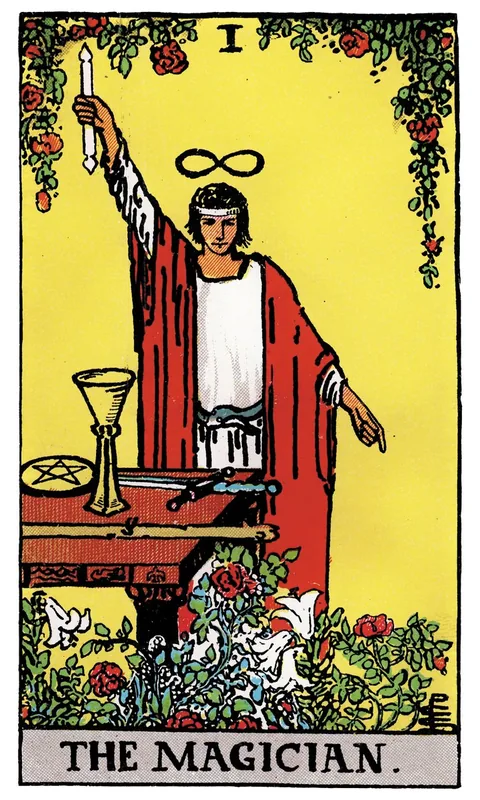
The archetype
The Magician stands at an altar laid with the tools of the four elements — wand, cup, sword, and coin — one hand raised to the sky and the other pointing to the earth. Above his head floats the infinity symbol. He is the figure who turns possibility into a plan: he has the materials, the language, and the timing, and the only real question is whether he can focus them toward something he actually wants. This is the card of initiative, of will made concrete through action.
The Stoic lens
Stoicism takes that raised hand and asks a sharper question: of everything on this altar, what is genuinely yours to command? Epictetus opens his handbook with the only distinction that matters — some things are up to us, and some things are not. Your judgments, your effort, your intentions are up to you. Outcomes, reputations, and other people’s responses are not. The Magician’s power, read through Stoicism, is real but bounded. He can act with total commitment and still hold the result with open hands.
The infinity symbol becomes a Stoic emblem here: not unlimited control, but the steady, repeatable discipline of governing what is actually within reach.
Reading The Magician upright
Upright, the Magician points to what Marcus Aurelius called the inner citadel — the part of you that no external event can storm. The card’s energy of willpower, focus, and resourcefulness is best spent on inputs rather than outcomes: the pitch you prepare, the skill you sharpen, the message you send with care. Stoicism rewards this kind of temperance. Do the work fully, then release your grip on how it lands. You will have acted well regardless of the verdict, and acting well is the only thing that was ever up to you.
Reading The Magician reversed
Reversed, the Magician warns that technique can hide sincerity — the over-polished pitch, the promise made before anything is real. The Stoic reading adds a second warning: disturbance. You may be staking your serenity on things that were never yours to control, mistaking influence for command. This is the territory of anxious overreach. Speak less and do more; verify before you promise; and notice the difference between shaping your effort and trying to script the world’s response.
In love and connection
Communication flows under the Magician — it is a good time to express what you feel and name what you need. Build attraction through sincerity and follow-through rather than charm. A Stoic would add: let your conduct, not the other person’s reaction, be the measure of how well you loved. You can be honest, attentive, and clear, and still not control whether you are chosen. Govern the part that is yours.
In work and direction
The Magician can start the project, claim the opportunity, run the negotiation. Articulate your value clearly and deliver on it. Through a Stoic lens, progress is measured less by the status you reach and more by whether your choices expressed temperance and craft. Aim at excellence in the doing; treat promotions and applause as welcome but indifferent — pleasant when they come, never the foundation of your peace.
A question to sit with
What part of this situation is genuinely up to you, and what must you release?
A practice for this week
List the resources you truly have — time, people, skills, budget — and choose the single strongest leverage point, pushing it forward through consistent small actions. Then, each morning, sort the day into two columns: “up to me” and “not up to me.” Invest your energy only in the first. By evening, notice how much lighter the work feels once you stop trying to command what was never yours.
A note on using this reading
This content is for self-reflection and entertainment only and does not constitute medical, legal, or financial advice.
Want a live reading for your own question? Draw with The Stoic Gardener