The Devil · Stoicism
The Devil Meets Stoicism: The Discipline of Acceptance
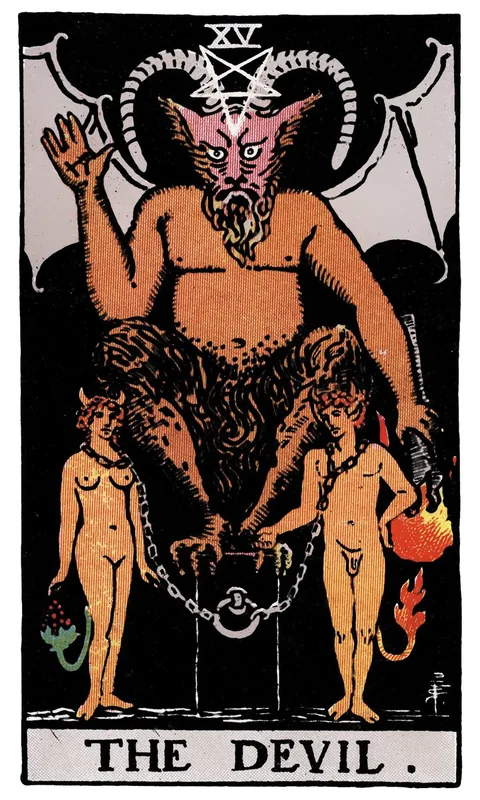
The archetype
The Devil represents what you believe you cannot live without. It exposes how attachment, addiction, and fear lock you inside a familiar cage. This card is not condemnation; it is illumination. When you see what you are trading—safety, pleasure, control—you gain the power to choose freedom again.
The Stoicism lens
Stoicism reads the card as a test of judgment: external events are indifferent, and only your response to them carries moral weight.
At its core, Stoicism, shaped by Epictetus and Marcus Aurelius in Greco-Roman antiquity, holds that peace comes from sorting what is within your control from what is not. Placed beside the Devil, whose imagery includes chains, dark altar, horns and torch, paired figures, and shadow, the card stops being a prediction and becomes a mirror for how you meet your situation.
Reading The Devil upright
The Devil’s energy of attachment, desire, and addiction finds a natural dialogue here. Upright, the card points to the inner citadel, a reminder to govern attention, assent, and desire rather than chase outcomes you cannot command. Read this way, the card rewards temperance: the upright Devil is less an instruction than an opportunity to practice it.
Reading The Devil reversed
Reversed, The Devil suggests loosening the chains: recognizing patterns, admitting dependency, and taking steps to change. Liberation is not a single insight; it is sustained boundaries and practice. Freedom can feel uncomfortable at first, because it is unfamiliar. Reversed, the card warns of disturbance, of staking your serenity on things that were never yours to control. In Stoicism, this is the territory of anxious overreach, a signal to slow down and look again before you act.
In love and connection
Intense attraction, possessiveness, or unhealthy dependency may appear. Distinguish love from control: are you nourishing each other, or becoming addicted to each other? A Stoicism reading would add: let temperance guide how you show up, rather than the outcome you are hoping to secure.
In work and direction
Watch power games and work addiction. You may be driven by status or fear. Ask whose standard you are living by. Through this lens, progress is measured less by status and more by whether your choices express temperance.
A question to sit with
What part of this situation is genuinely up to you, and what must you release?
A practice for this week
Identify your “chains” honestly: relationships, habits, money, approval, or power. Cut one obvious bondage with a concrete action and build a healthier replacement. Each morning, separate the day into ‘up to me’ and ‘not up to me’, and invest your energy only in the first column.
A note on using this reading
This content is for self-reflection and entertainment only and does not constitute medical, legal, or financial advice.
Want a live reading for your own question? Draw with The Stoic Gardener